

Autism in Adults (Ages 18–35): Why So Many People Are Being Diagnosed Later in Life
Time to Renew You LLC | Client Education
Many adults in the prime of young adulthood—especially between ages 18 and 35—find themselves seeking answers about lifelong patterns they’ve lived with but never understood. Increasingly, that answer is autism spectrum disorder (ASD). Far from being a “childhood condition,” autism is a neurodevelopmental difference that can go undetected for years—particularly among people who have masked traits, excel academically, or coped by adapting socially.
Recent research highlights a growing trend of adult diagnosis and deeper understanding of how masking and burnout uniquely affect neurodivergent people. These insights not only normalize late identification, but also explain why many adults feel exhausted, misunderstood, or “different” for so long.
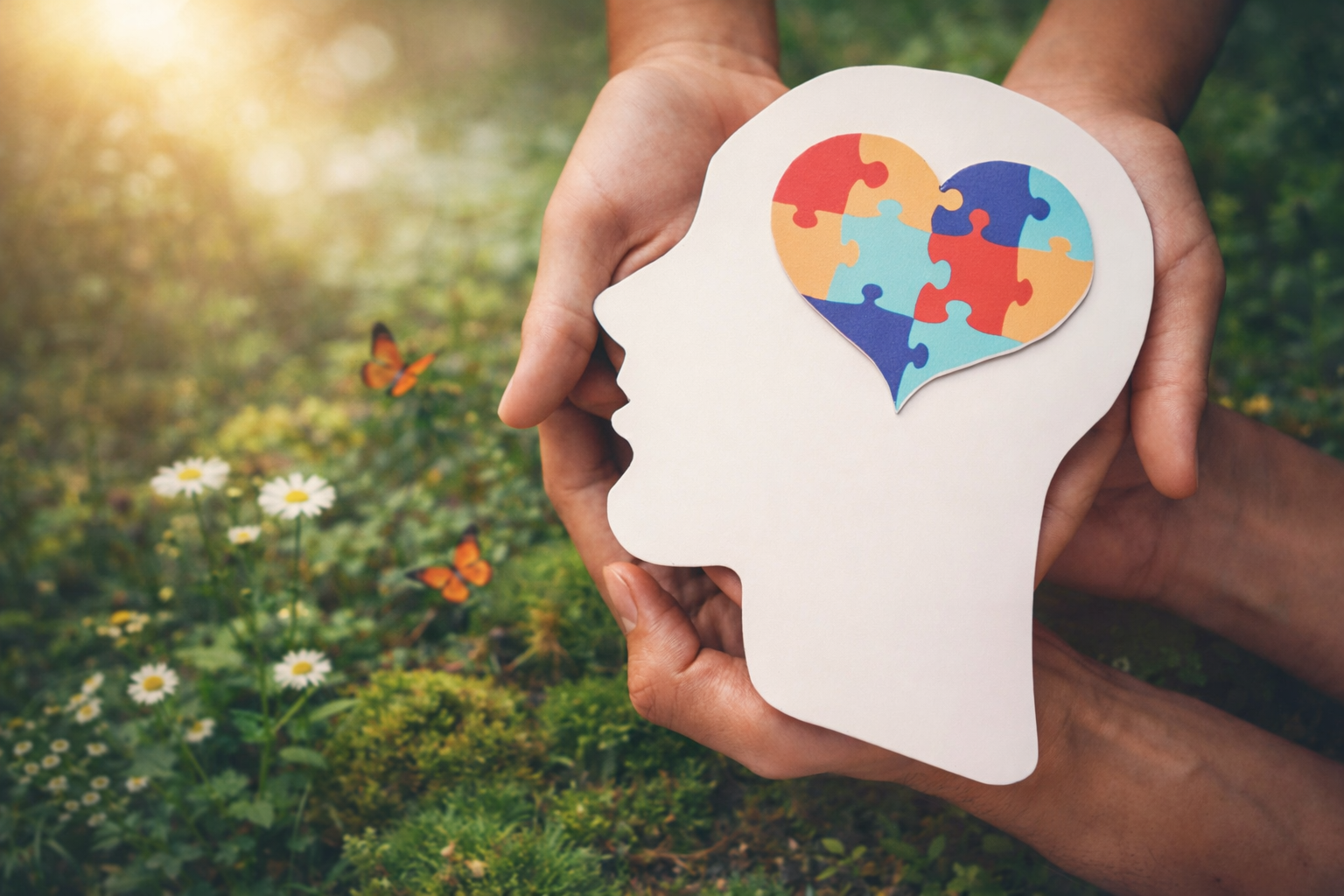
Many autistic adults spend years adapting to a world that wasn’t built for their nervous systems. Understanding yourself isn’t a setback—it’s clarity.
Why autism is often missed until adulthood
Adult diagnosis has risen rapidly over recent years. Studies examining national health records show that many adults now seek autism evaluations later in life, and diagnostic criteria and screening tools are helping clinicians recognize presentations that were previously overlooked.
Other research frames late diagnosis as part of a trajectory: differential diagnosis with co-occurring conditions (like anxiety or ADHD), changing life stressors, or shifts in self-awareness often prompt adults to pursue assessment later.
Masking and camouflaging: the hidden labor
Many autistic adults are experts at masking—suppressing natural behaviors to fit social expectations. Masking can help someone succeed socially or professionally in the short term, but research shows it comes with measurable costs:
Masking is associated with higher momentary stress when social demands are present.
Studies document that regular masking correlates with lower well-being, increased anxiety and depression, and reduced personal authenticity.
Cultural and contextual factors influence how masking is expressed and experienced, including burnout severity in certain young adults.
These findings help explain why many people who appeared to “cope well” externally ended up exhausted, disillusioned, or unable to sustain social performance over time.
Autistic burnout as a distinctive experience
Autistic burnout is more than everyday fatigue. Emerging research recognizes it as a unique phenomenon characterized by deep exhaustion, reduced functioning, diminished tolerance to sensory stimulation, and loss of skills or routines—a pattern distinct from general workplace burnout.
This form of burnout often results not just from life’s ordinary demands, but from sustained masking and societal pressure combined with sensory and executive loading.
Autism isn’t a singular condition
Recent research advances even the biological understanding of autism, showing that it is not one monolithic condition, but a range of neurodevelopmental profiles that vary across individuals and developmental periods. This complexity reinforces what many autistic adults already know: their experiences don’t fit a narrow stereotype of autism, yet they are valid and meaningful.
What autism looks like in adults ages 18–35
Autistic young adults often report:
Feeling deeply exhausted after social interaction
Needing more downtime than peers
Sensory overload in noisy, crowded environments
Challenges with unspoken social rules or transitions
Intense focus on interests that bring comfort
Internal stress that doesn’t show outwardly
And for many, adult diagnosis reframes life experiences—not as personal failure, but as a neurodevelopmental framework that brings clarity and self-understanding.
Therapy that honors neurodiversity
Neurodiversity-affirming therapy doesn’t aim to “normalize” autistic people. Instead, it focuses on:
Exploring identity with compassion
Supporting emotional and sensory regulation
Reducing the burden of masking
Creating rhythms and structures that suit your nervous system
Fostering self-advocacy and self-trust
Therapy can help you understand your patterns, accommodate your needs, and build resilience—not because you’re “broken,” but because life is demanding and mental health support matters.
References
Brennan, E. (2025). Deconstructing information about autism diagnosis in adults. Journal of Autism Research. https://doi.org/10.1007/s10803-025-07123-0
Gonzalez-Herrero, B., Coebergh, J., & Pagonabarraga, J., et al. (2025). Structured clinical diagnostic assessment reveals autism spectrum disorder in adults with functional neurological disorder. Scientific Reports, 15, 40423. https://doi.org/10.1038/s41598-025-20508-6
Hull, L., et al. (2017). “Putting on my best normal”: Social camouflaging in adults with autism spectrum conditions. Journal of Autism and Developmental Disorders, 47(8), 2519–2534.
Scheeren, A. M., et al. (2025). Masking, social context, and perceived stress in autistic adults. Journal of Autism and Developmental Disorders.
Seçer, I., et al. (2025). Autism traits and mental well-being: The mediating role of camouflaging. Scientific Reports.
Ali, D., et al. (2025). Burnout as experienced by autistic people: A systematic review. Clinical Psychology Review, 122, 102669.
Superson, W. (2025). Experiences of an autism diagnosis in adulthood. Journal of Clinical Medicine.
